
A New Kind of Memorial Day:
Miami’s Hyundai Air & Sea Show Reimagines Patriotism
by Chris Mitev and Lynn Miteva
Presented in collaboration with


From Barricades to Breathtaking:
A New Memorial Day Tradition
Memorial Day weekend in Miami Beach has long been synonymous with barricades, gridlock, and a mass exodus of locals.
For 25 years, the tension was predictable. We usually packed our bags and fled the chaos.
However, this year was different.The city was transformed.
The atmosphere was filled with camaraderie and national pride.
The Hyundai Air & Sea Show, part of the National Salute to America’s Heroes, filled the iconic sands with awe-inspiring aerial and sea demonstrations, drawing crowds eager to honor the nation’s defenders.
For the first time in 25 years, many of us stayed—and we were glad we did.

Patriotic Village: Ground Zero for American Pride
It began with a casual conversation at the Loews Hotel.
We met several U.S. Air Force pilots—sharp, grounded, and surprisingly approachable.
They invited us to the show, and their enthusiasm was infectious.
Stretching across five city blocks the “Patriotic Village”, was buzzing with live performances, interactive military exhibits, and inspiring demonstrations.
The village wasn’t just about hardware; it was about connection—between civilians and service members, past and present.
It was about people, stories, and shared purpose.


U.S. Army Parachute Team Joins British Army Red Devils by SPC Maribeth Kossman
Skyborne Spectacle: Parachute Teams Dazzle
-
U.S. Army Golden Knights: Known as the “Champions of the Skies,” the Golden Knights are an elite parachute team representing the U.S. Army at events worldwide. Established in 1959, they are the Army’s official aerial demonstration unit. Their team includes a Tandem Team (taking first-time jumpers aloft), a Competition Team (world-class skydivers competing globally), and an Aviation Detachment (top Army pilots). The Golden Knights are not just parachutists; they are ambassadors of the Army’s prowess and precision. They’ve been deployed in both combat and peacekeeping operations around the globe—Afghanistan, Iraq, the Balkans—each member having served in critical missions before joining the demonstration team.
-
British Army Red Devils: The Red Devils are the official parachute display team of the British Army’s Parachute Regiment. Every member has served in operational conflict zones like the Falkland Islands, Northern Ireland, Kosovo, Sierra Leone, Afghanistan, and Iraq. They’ve seen also action in the Middle East and NATO operations in Eastern Europe.


Coast Guard Demos: Rescue in Action
The U.S. Coast Guard’s air-sea rescue demonstration was more than just a spectacle.
It showcased the precision and bravery of crews who routinely risk their lives to save others.
Helicopters hovered over the surf, lowering rescue swimmers into the churning water and hoisting “survivors” to safety—a vivid reminder of the Coast Guard’s crucial role in both peacetime and disaster response.
The Coast Guard's motto, "Semper Paratus," meaning "Always Ready," encapsulates their commitment to standing watch "24 hours a day 365 days a year".

The U.S. Army Parachute Team jumps in Miami by Megan Hackett

Cyber Corp equipment image by Lynn Miteva
The U.S. Army Cyber Corps: Defending the Digital Battlefield
Amid the spectacle, the presence of the U.S. Army Cyber Corps reminded us that modern warfare isn’t just about hardware.
These specialists protect Army networks, systems, and information from cyber threats. Their responsibilities include:
-
Cyber security operations: Preventing, detecting, and responding to cyber intrusions.
-
Cyber intelligence: Gathering and analyzing threat intelligence to support operations.
-
Cyber warfare: Conducting offensive and defensive cyber operations to disrupt enemy systems.
-
Network operations: Maintaining secure, reliable Army networks.
They conduct vulnerability assessments, develop security policies, and train personnel, ensuring that America’s digital front lines are as secure as its physical ones. In an era of escalating cyber conflict, their work is indispensable to national security.

Cyber Corp equipment image by Lynn Miteva

Cyber Corp equipment image by Chris Mitev
Air Power on Display: Aircraft, Speed, and Purpose
B-2 Spirit: The Stealth Icon
The B-2 Spirit, with its distinctive flying wing design, stole the show. Deployed in Kosovo, Afghanistan, Iraq, and Libya, the B-2 is the world’s most expensive aircraft at over $2 billion per unit.
Its ability to penetrate sophisticated air defenses and deliver both conventional and nuclear payloads makes it a linchpin of U.S. strategic power.
Only the U.S. operates the B-2, underscoring its technological exclusivity.
Stealth Tech: Nearly invisible to radar
Significance: The B-2 is not just a marvel of engineering—it’s a diplomatic tool. Used for precision strikes, it projects power from afar, often launched from U.S. bases as far as Missouri to reach targets across the globe.

B-2 stealth bomber, image by by SSgt Kristen Heller

B-2 stealth bomber, image by Lauren Kelly

B-2 stealth bomber, image by Giancarlo Casem

F 22 Raptor image by USAF Maj. Samuel
F-22 Raptor:
Our Untouchable Favorite
We already know the F-22 Raptor inside out—America's crown jewel of air superiority. Conceived during the Cold War's twilight, its YF-22 prototype first flew in 1990 and won the Advanced Tactical Fighter competition in 1991.
Operational since 2005, this fifth-generation, twin-engine stealth fighter remains unmatched, with a blistering Mach 2.25 top speed and sustained supercruise at Mach 1.8.
Its combat record, though limited, includes surgical strikes in Libya (2011) and against ISIS in Syria (2014). Built solely for the U.S., the Raptor was never exported—Congress locked it down to protect its sensitive tech.
Only 187 were ever built before production ceased in 2012, making it as rare as it is lethal. Notably, it can outmaneuver threats at 60° angles of attack and vanish from radar like a ghost.
Even today, no other nation fields a jet that truly rivals it.
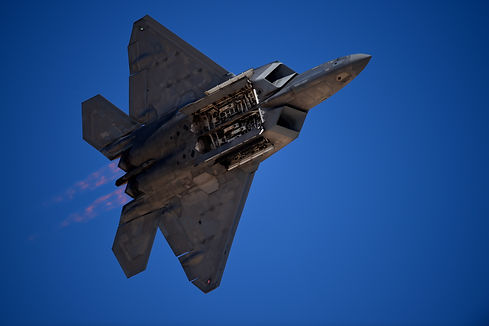
F 22 Raptor image by Airman 1st Class Nathan Langston

F 22 Raptor image by Airman 1st Class Nathan Langston
The Silent Spear: U.S. Army Special Forces Vehicle
The Special Forces Vehicle used by the U.S. Army—most likely modeled on or adapted from the Arquus SABRE platform—is a lightweight, highly mobile tactical vehicle designed for deep reconnaissance, rapid assault, and covert operations in hostile terrain. What makes it exceptional is its modular design and combat versatility.
It’s equipped with advanced electro-optical targeting systems, a 360-degree remote-controlled weapons station (often fitted with a 12.7mm machine gun or grenade launcher), anti-drone jammers, secure communications gear, ballistic protection, and run-flat tires for evasive maneuvers.
A drone launch-and-recovery module is often integrated, allowing real-time aerial reconnaissance. Compact yet lethal, the SABRE acts as a mobile nerve center for Special Operations teams operating where traditional support is unavailable.

U.S. Army Special Forces Vehicle image by Lynn Miteva/ Chris Mitev


U.S. Army Special Forces Vehicle image by Lynn Miteva/ Chris Mitev
U.S. Army Special Forces Vehicle image by Lynn Miteva/ Chris Mitev
A-10 Thunderbolt II (“Warthog”)
-
Speed: 420 mph
-
Specialty: Ground troop support
-
Feature: GAU-8 Avenger rotary cannon—devastating against tanks
-
Known For: Saving countless soldiers in Iraq and Afghanistan

A-10 Thunderbolt II (“Warthog”) image by Lynn Miteva/ Chris Mitev

CV-22 Osprey: The Transformer of U.S. Special Operations
The CV-22 Osprey is a rare hybrid—a tiltrotor aircraft that combines the vertical lift of a helicopter with the speed and range of a fixed-wing plane.
Used primarily by U.S. Air Force Special Operations Command, it can take off from tight zones, then cruise at 275 knots (316 mph)—double the speed of most helicopters.
What makes it truly unique is its terrain-following radar, allowing it to fly low and fast in total darkness, hugging valleys to avoid detection.
Lesser-known features include its ability to aerial refuel, making global reach missions possible without landing, and its advanced electronic warfare suite that can jam enemy radar.
The CV-22 can insert elite teams into hostile territory, then vanish just as quickly—earning its nickname: the "ghost bird".
B-52 Stratofortress: The Relic That Still Rules the Sky
The B-52 Stratofortress, introduced in 1955, is the longest-serving bomber in U.S. history—and it’s not retiring anytime soon. Despite its age, the B-52 remains a cornerstone of American airpower due to its unmatched payload capacity (70,000 lbs), global range (8,800 miles without refueling), and versatility.
What’s little known is that it can launch nuclear and conventional cruise missiles, fly with electronic countermeasure pods, and even carry hypersonic weapons in testing.
Crews often refer to it as "BUFF" (Big Ugly Fat Fellow), but it’s getting a digital brain transplant: new radar, glass cockpit, and Rolls-Royce engines to extend its life into the 2050s.
Some current B-52 pilots are flying the same aircraft their grandfathers once did—a living legend with afterburners.

A U.S. Air Force B-52H Stratofortress image by Senior Airman Kyle Wilson

Air Force Photo by Richard Gonzales
B-1B Lancer: The Supersonic Backbone of Long-Range Strike
The B-1B Lancer, nicknamed the “Bone” (from B-One), is a strategic bomber with the soul of a fighter jet.
Unlike the stealthy B-2 or massive B-52, the B-1B is built for speed (Mach 1.25) and payload—capable of carrying over 75,000 pounds of ordnance, the largest conventional payload of any bomber.
A little-known feature is its variable-sweep wings, which shift mid-flight for maneuverability or fuel efficiency.
Though originally designed for nuclear missions, it was retooled for conventional warfare under START treaty limits. Its radar signature is significantly smaller than expected for its size, allowing it to operate in contested airspace.
Used extensively in Iraq, Afghanistan, and Syria, it can loiter for hours and deliver precision strikes with deadly accuracy—earning its reputation as a relentless, high-speed workhorse of U.S. airpower.
F-35 Lightning II: The Most Advanced – and Most Debated – Fighter in History
The F-35 Lightning II is the first stealth multirole fighter to integrate air-to-air, air-to-ground, and electronic warfare in a single platform, but it’s also the most expensive weapons program in history—costing over $1.7 trillion over its lifetime.
Capable of supersonic speeds (Mach 1.6) and short or vertical takeoffs (F-35B), it features sensor fusion that gives pilots a 360-degree view via the $400,000 helmet, which lets them “see through” the aircraft.
Lesser-known is its Autonomic Logistics Information System (ALIS)—a digital maintenance suite that faced years of glitches, prompting its replacement with ODIN.
The jet faced intense controversy over delays, cost overruns, and dogfight performance in early trials. Though still in service and deployed with allies worldwide, it’s already being eyed for eventual replacement by sixth-gen programs like the NGAD (Next Generation Air Dominance)—a sign that even cutting-edge tech can be both indispensable and imperfect.


Reclaiming the Beach: How the Hyundai Air & Sea Show Reimagined Memorial Day in Miami Beach
For the first time in 25 years, Memorial Day in Miami felt not like something to flee, but something to feel—thanks to the Hyundai Air & Sea Show, which transformed the city's tension-filled holiday into a breathtaking tribute of unity and strength.
Once defined by barricades, chaos, and our annual exodus, this year’s celebration was surprisingly serene, even inspiring, as jets screamed over sunlit beaches and soldiers stood shoulder to shoulder in a living tableau of American resolve.
Dubbed "A Symphony of Service", the show seamlessly fused active duty, reserves, and allied forces into one awe-striking demonstration of the “total force” concept—where you couldn’t tell who was full-time or part-time, only that all were fully committed.
With mass enlistments, personal moments between pilots and kids, and a crowd that was lively but calm, this wasn’t just a spectacle—it was a civic reset. In a city once scarred by Memorial Day’s darker chapters, the Hyundai Air & Sea Show reimagined the weekend as a proud, collective salute to service, sacrifice, and the surprising possibility of peace through power.