

Nuclear Rivals Clash:
India and Pakistan Engage in Largest Aerial Battle Since WWII
May 9,2025. Rikeza Editorial Team


What Triggered the Conflict?
On April 22, 2025, a brutal terrorist attack in Pahalgam, Indian-administered Kashmir, resulted in the deaths of 28 civilians, predominantly Hindu tourists.
The Resistance Front, linked to the Pakistan-based group Lashkar-e-Taiba, claimed responsibility. India accused Pakistan of supporting the militants, a charge Islamabad denies.
In retaliation, India launched "Operation Sindoor" on May 6, targeting nine sites in Pakistan and Pakistani-administered Kashmir, aiming at militant infrastructure.


Aerial Dogfight: Jets, Losses, and Claims
-
Pakistan’s Claims: Shot down 5 Indian jets (3 French Rafales, 1 Russian MiG-29, 1 Su-30) using Chinese-made J-10C fighters.
-
India’s Response: Denied losses, stated it repelled drone attacks and inflicted “befitting” damage.
-
Scale: Over 125 fighter jets clashed in Wednesday’s dogfight-the largest aerial battle since World War II
-
Drones: Pakistan launches 500 drone attack on India using Turkish-made Asisguard Songar Drones, launched in three waves in 36 locations across the western border on Thursday (May 9, 2025) night between 8 p.m. to 11:30-12 a.m.

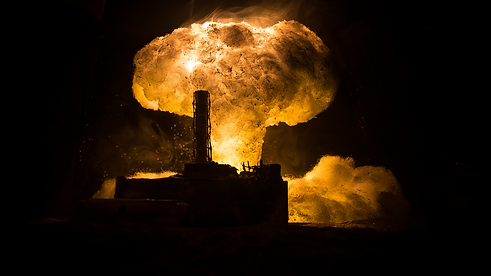
Nuclear Nightmare
What makes this standoff terrifying? Both India and Pakistan are nuclear powers:
-
Arsenals: India (~172 warheads) and Pakistan (~170) have enough firepower to trigger mutual annihilation.
-
Policy Split: India adheres to “No First Use”; Pakistan refuses to rule out a nuclear strike if threatened
Global Shockwaves: USA & The West on Edge
The conflict threatens vital trade routes and investor confidence:
-
Disrupts Indian IT and pharmaceutical exports, a major supply line to the West.
-
Affects global supply chains, especially if airspace or shipping lanes are restricted.
-
India banned $500M in Pakistani goods via third countries. Rice exports-critical for Asia-face disruption, risking food shortages.
-
IMF Bailout Sabotage? India may block Pakistan’s $1.3B IMF loan, crippling its economy amid conflict
-
Wall Street and European markets dipped sharply on news of escalation.


Kashmir: The Powder Keg
Kashmir is no mere border dispute — it’s a geopolitical pressure cooker.
A disputed region since 1947, split between India, Pakistan, and shadowed by China, Kashmir sits at the crossroads of South, Central, and East Asia.
-
Strategic Jackpot: Whoever owns Kashmir controls the roof of South Asia — surveillance, missiles, and troops perched above three nuclear powers.
-
Water Wars in Waiting: Kashmir's rivers are Pakistan’s lifeline. Control upstream, and you choke their fields downstream.
-
China’s Silent March: Roads, bases, and Belt & Road highways cut right through disputed lands — Beijing’s Himalayan expansionism is loud and clear.
-
Symbolic and Political Significance: For India, Kashmir is a symbol of secularism; for Pakistan, it represents the unfinished business of Partition; for Kashmiris, it’s about self-determination-making the conflict deeply emotional and politically charged
How Did Pakistan Get U.S. F-16s in the First Place?
Few realize that Pakistan’s elite fleet of F-16 Fighting Falcons, the backbone of its air power, traces back to 1983, when Washington began supplying the jets under the Peace Gate I program.
Initially, 40 jets were delivered (28 A models and 12 B trainers), part of a Cold War-era deal to bolster Pakistan against Soviet influence in neighboring Afghanistan.
However, deliveries were later frozen under the Pressler Amendment in 1990 due to Pakistan’s nuclear program — a diplomatic freeze that left several jets mothballed in U.S. storage.
Over time, Pakistan expanded its fleet to around 75 F-16s, acquiring advanced C and D variants from Jordan.


What’s Next: Strategies & Scenarios
-
Cyber warfare escalations, with both countries reportedly probing critical infrastructure.
-
Missile deployments along the LoC, including India’s BrahMos and Pakistan’s Babur cruise missiles.
-
Possible mobilization of ground troops, already hinted at by satellite imagery.
The big question: Will global diplomacy intervene — or will a regional skirmish become a nuclear showdown?